In this blog post, we'll share three vibe coding tips that will put you ahead of 99% of other AI app developers.
These insights come from months of hands-on experience building over 10 AI apps, and they'll save you hundreds of hours of trial and error.
Let's go through them, one-by-one.
Tip 1: Choosing the Right AI Model for Coding
When it comes to AI app development tips, understanding which AI model to use is crucial.
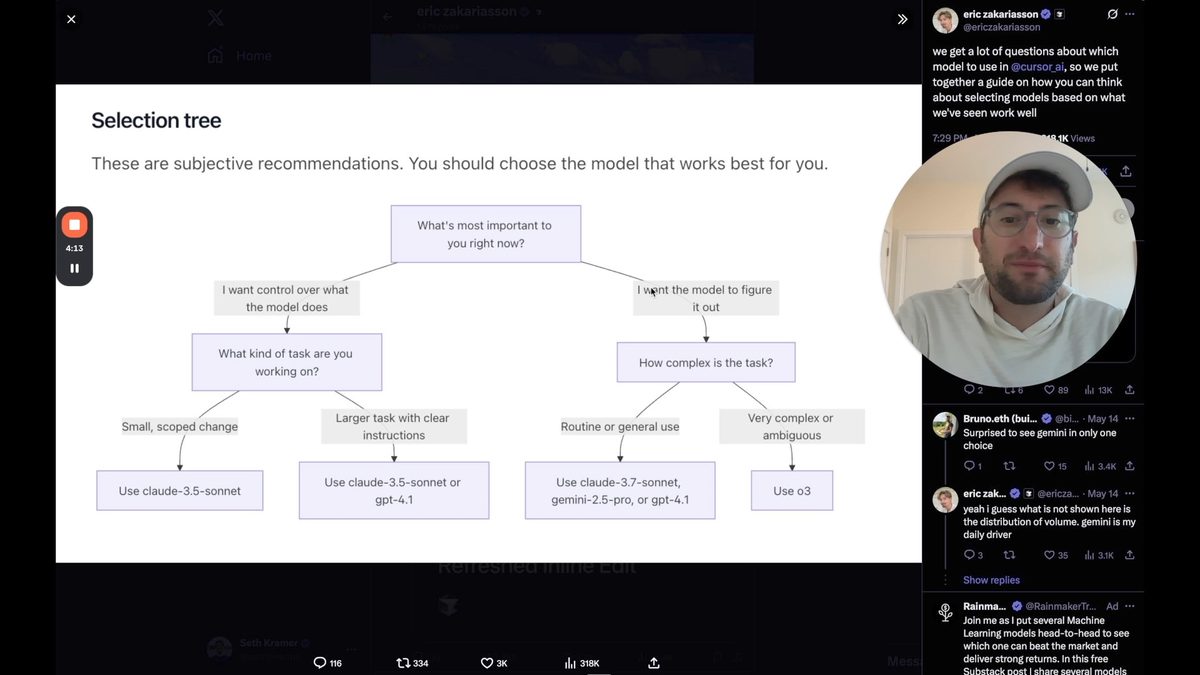
Tools like Cursor offer a variety of models, each with its own strengths and cost considerations. Here's a breakdown of when to use different models:
- GPT-3.5 Sonnet: Best for small, scoped changes and larger tasks with clear instructions.
- Gemini 2.5 Pro: Ideal for routine or general use tasks.
- Claude 3.7 Sonnet: Great for more creative tasks and complex problem-solving.
- GPT-4 (O3): The most powerful (and expensive) option for very complex or ambiguous tasks.
Knowing which model to use in different situations will significantly improve your AI coding efficiency and output quality.
Tip 2: Flexibility in AI Coding Platforms
One of the biggest advantages of AI coding platforms is that you're not locked into a single tool. Here's how you can leverage this flexibility:
- Start with Lovable for initial app setup and API integration
- Export your code to GitHub
- Transition to Cursor for more granular control
- Switch between platforms like Windsurf or Claude Code as needed
This approach allows you to benefit from the strengths of different platforms throughout your development process.
Here is a full video on this:
Tip 3: Mastering API Integration in AI Apps
Understanding API calls is essential for top-tier AI app development. Here's how to effectively integrate APIs:
- Study the API documentation thoroughly
- Copy the request and example output
- Paste this information into your AI coding tool
- Let the AI interpret and integrate the API into your app
For example, when building an app like Cartoons.app, which uses OpenAI's image API, understanding how to make these API calls is crucial for success.
Here is a video on building an app using the ChatGPT image API.
Best Practices for AI App Development
To maximize your AI app development process:
- Start with Lovable for initial setup and API integration
- Transition to Cursor for fine-tuned control
- Balance creativity and control in AI-powered coding
- Continuously learn and adapt to new AI tools and techniques
Remember, the key to successful AI app development is understanding the strengths of different tools and knowing when to use them.
Want to take your AI app development skills to the next level? Sign up for No Code MBA courses. We offer in-depth tutorials on building AI apps, automations, and websites, helping you stay ahead in the rapidly evolving world of AI development.
Frequently Asked Questions
What is the best AI model for beginners in AI app development?
For beginners, GPT-3.5 Sonnet is a good starting point. It's versatile enough for most tasks and less expensive than more advanced models.
Can I use multiple AI coding platforms for a single project?
Yes, you can. In fact, it's often beneficial to use different platforms for different stages of your project, leveraging the strengths of each tool.
How important is API integration in AI app development?
API integration is crucial for creating powerful and versatile AI apps. It allows your app to communicate with other services and expand its capabilities significantly.
What's the advantage of starting with Lovable and then moving to Cursor?
Lovable is great for initial setup and API integration, while Cursor offers more granular control. This combination allows you to set up quickly and then fine-tune your app as needed.
How can I stay updated with the latest AI app development techniques?
Continuously learning through resources like No Code MBA, experimenting with new tools, and staying engaged with the AI development community are great ways to keep your skills sharp.
Advertiser disclosure: some links on this website are affiliate links, meaning No Code MBA may make a commission if you click through and purchase.